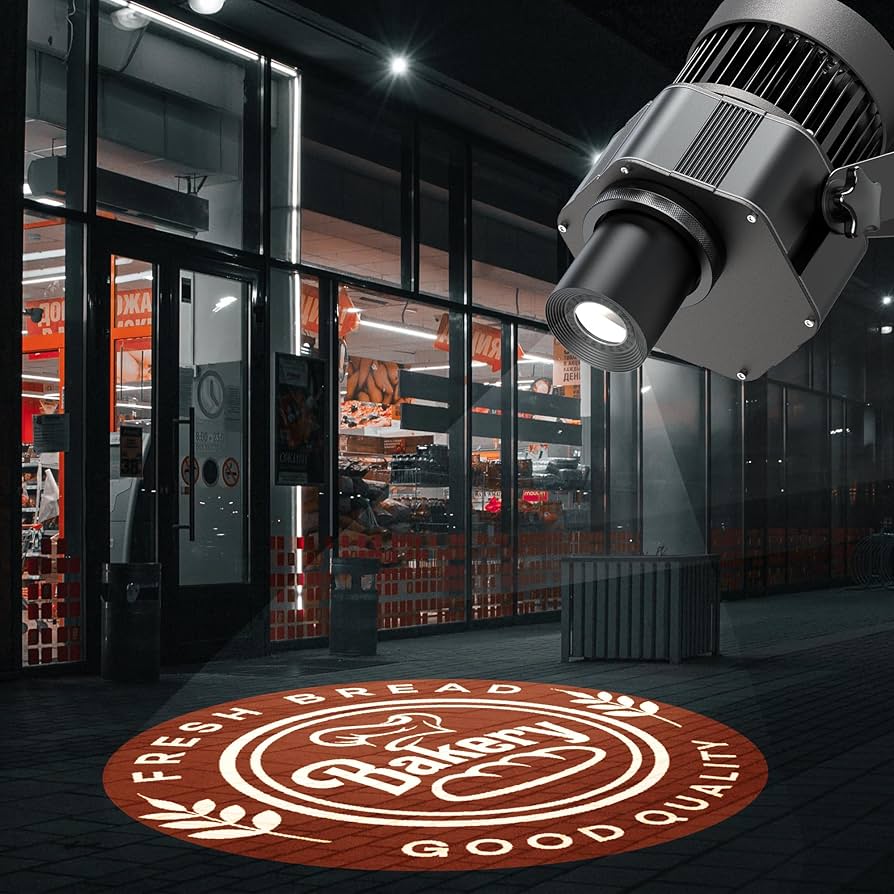
IP65 vs IP66: Which Rating Does Your Storefront Projector Actually Need?
Oct 21,2026 | JINGYU OPTOELEC
Every outdoor projector listing advertises an IP rating. Almost nobody explains what the second digit means — and that digit is the one that decides whether your projector survives its first real storm.
What the two digits mean
IP stands for Ingress Protection. The first digit is solids (dust), the second is liquids (water).
|
Rating |
Dust protection |
Water protection |
Real-world meaning |
|
IP65 |
Complete (6) |
Water jets from any direction (5) |
Survives rain and hose-down |
|
IP66 |
Complete (6) |
Powerful water jets (6) |
Survives heavy rain and pressure washing |
|
IP67 |
Complete (6) |
Temporary immersion (7) |
Survives flooding up to 1m for 30 min |
Both IP65 and IP66 have identical dust protection. The difference is only how hard the water can hit.
The practical difference for a storefront
For a projector mounted under an awning or overhang, IP65 is genuinely sufficient. Rain rarely strikes horizontally at pressure in a sheltered position.
IP66 becomes necessary in three specific situations:
1. Fully exposed mounting. A pole or wall bracket with no overhead cover, where wind drives rain directly into the housing.
2. Coastal or high-wind locations. Salt spray plus wind pressure is harsher than plain rain.
3. Regular cleaning by pressure washer. Storefronts washed down weekly need the higher water rating.
If none of those apply, IP66 is insurance — not a requirement. It costs more, and on a sheltered wall it changes nothing.
The IP myth that voids warranties
Here is what the rating does not cover: condensation.
A sealed projector heats up during the day and cools at night. Moisture inside the housing condenses on the lens from the inside. No IP rating prevents this, because the water never entered from outside — it was already in the air.
This is the most common cause of "my IP66 projector fogged up and died." The fix is a breathing valve or desiccant cartridge, and not every manufacturer includes one. Ask before you buy.
Second myth: IP67 does not mean submersible forever. It means 30 minutes at one meter. Projectors rated IP67 are for flood-prone areas, not permanent underwater installation.
What actually kills an outdoor projector
In our experience servicing installations, the failures rank roughly like this:
- Condensation on the lens — most common by far
- Heat failure — undersized housing, blocked vents
- Water ingress at the cable gland — the seal fails before the housing does
- UV degradation of the housing plastic
- Actual water ingress through the housing — rare if the rating is genuine
Notice that the IP rating only addresses item 5. This is why buying "IP67" and ignoring mounting position, ventilation, and gland sealing still ends in failure.
A checklist before you mount anything
- Mount under cover if you can. Even a 30cm overhang changes the water load dramatically.
- Point the cable gland downward. Water runs along cables. This one detail prevents most ingresses.
- Leave ventilation clearance. Do not box the projector in.
- Check the operating temperature range. Cold-climate installs need a unit rated below freezing.
- Confirm the warranty covers water damage. Some "IP66" warranties exclude it in the fine print.
Matching the projector to the job
The IP rating tells you about survival, not performance. Three other specs decide whether the logo actually looks good:
Wattage vs projection distance. A 25W unit throws a crisp logo 3–6 meters. For a logo 10 meters away on a building facade, you need 60W or higher. Undersized projectors produce a dim, soft image that customers read as "cheap sign."
Gobo quality. A steel gobo in a high-power outdoor unit degrades quickly from heat. For permanent installations, glass gobos hold detail for years and are the only sensible choice outdoors.
Lens and focus. Fixed-focus units are cheaper but only sharp at one distance. Adjustable focus matters if you may reposition the projector.
So which should you buy?
|
Your situation |
Recommended rating |
|
Under awning, moderate climate |
IP65 |
|
Fully exposed pole mount |
IP66 |
|
Coastal, salt spray, high wind |
IP66 minimum |
|
Pressure-washed storefront |
IP66 |
|
Flood-prone area |
IP67 |
|
Indoor only |
IP20–IP44 is fine |
Frequently asked questions
Is IP66 better than IP65 for a logo projector? For exposed mounting, yes. For sheltered mounting, it makes no practical difference — spend the difference on wattage instead.
Can I leave an IP65 projector outside all winter? Yes, if it is rated for low temperatures and mounted where snow does not accumulate on the lens.
Why does my outdoor projector fog up if it is IP66? Condensation, not water ingress. The rating does not cover moisture already in the air inside the housing.
Does a higher IP rating mean a brighter image? No. IP rating and brightness are unrelated specifications.
Need an outdoor logo projector?
We supply IP65 and IP66 logo projectors from 25W to 300W, with glass gobos cut to your logo from $39. Free design proof, ships in 3 days. Email sales@gobofactory.com or WhatsApp +86 13456752363.
Megjegyzés