Gobo Gels Technical Guide: Material Properties, Manufacturing & Compatibility Standards
Feb 02,2026 | JINGYU OPTOELEC
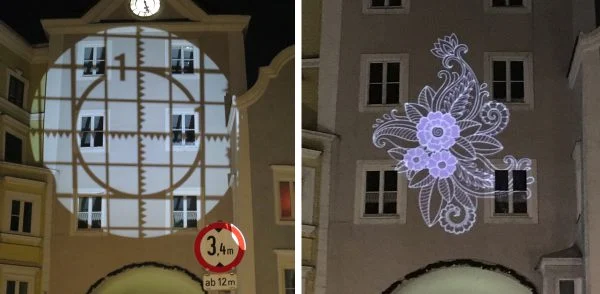
As the core imaging component of projectors, gobos directly determine projection effect, service life, and equipment compatibility. Based on industry technical specifications, official brand manuals (such as Auer Lighting and BEGA), and professional manufacturing data, this article breaks down key technical knowledge of gobos from four core dimensions: material technical characteristics, manufacturing process specifications, installation and compatibility guidelines, and quality inspection standards.
Core Material Technical Characteristics of Gobo Gels
The material selection of gobo gels must match light source power, usage scenarios, and projection requirements. The mainstream materials in the industry are divided into three categories: metal, glass, and plastic. Each type of material has clear industry standards for technical parameters and characteristics, as detailed below:
Metal Gobos: High-Temperature Resistance & Durability-Oriented
The core material is thin stainless steel or aluminum alloy sheets, formed by laser cutting technology. Technical parameters and characteristics strictly comply with industry specifications:
- Physical parameters: Standard thickness is 0.2mm (customizable with ±0.05mm adjustment), and the outer diameter must match the fixture slot (mainstream is 37.5mm);
- High-temperature resistance: Continuous working temperature resistance up to 300℃, short-term (within 30 minutes) peak temperature resistance up to 350℃, complying with Auer Lighting's technical standards for white metal gobos;
- Technical limitations: Due to material properties, complex patterns require a "bridge" structure (to prevent pattern breakage), which cannot 100% restore the original design. Small text (<2mm) is prone to edge burrs;
- Application scenarios: Long-term continuous projection (such as commercial logo display), high-temperature light source environments (halogen lamp fixtures).
Glass Gobos: High-Precision & Color-Oriented
The base material is borosilicate float glass (Borofloat® or D263 material), with a dichroic coating on the surface. Technical characteristics are as follows:
- Optical performance: Mirror side reflectivity >90% (at 550nm wavelength), black absorption side reflectivity <5%, light transmission area transmittance >90%, ensuring projection contrast and clarity;
- High-temperature resistance: Continuous working temperature resistance up to 400℃, short-term peak temperature resistance up to 450℃ (within 30 minutes), no deformation or coating peeling;
- Core technology: Color patterns are achieved by stacking multiple layers of dichroic coatings, which can restore gradient colors and create complex patterns (such as photo-level details) without the need for "bridges";
- Technical limitations: High brittleness, weak impact resistance, easy damage with frequent disassembly, and shockproof packaging required for transportation.
Plastic Gobos: Low-Cost & Disposable-Oriented
Made of high-temperature resistant PET plastic material, suitable only for low-power light source scenarios. Technical parameters are as follows:
- Physical parameters: Thickness 0.3-0.5mm, maximum temperature resistance 150℃, deformation and discoloration easily occur beyond this temperature;
- Process characteristics: Low-cost laser cutting forming, supporting small-batch rapid customization (3-4 days delivery), but no scratch-resistant coating on the surface;
- Application scenarios: Disposable events (such as temporary weddings, short-term exhibitions), low-power LED projectors (≤24W).
Technical Specifications for Gobo Gel Manufacturing Processes
The manufacturing of gobo gels must follow strict technical processes. From design files to forming and processing, each step has clear standards to ensure projection effect and equipment compatibility:
Technical Requirements for Design Files
- File format: Must be vector graphics (AI format preferred). Bitmap images must meet a resolution of ≥1000dpi (higher requirements for glass gobos) to avoid jagged edges and blurriness;
- Pattern specifications: Metal gobos require a line width of ≥0.3mm (to prevent cutting breakage). Glass gobos have no line width restrictions, but color layers must be clearly marked;
- Dimension marking: Outer diameter of the gobo and effective pattern area (mainstream effective diameter 28mm) must be marked to match the fixture slot size requirements.
Core Forming Process Technology
- Laser cutting process (metal/plastic gobos): Nd:YAG laser cutting is adopted, with a cutting accuracy of ±0.01mm, no burrs or deformation on the edges. Metal gobos need deburring treatment after cutting;
- Lithography + coating process (glass gobos): First, pattern grooves are formed on the glass surface through lithography technology, then dichroic coatings (monochrome/multicolor) are stacked. The uniformity error of coating thickness is ≤0.002mm to ensure stable color projection;
- Quality calibration: After forming, projection testing must be performed to ensure no pattern distortion, uniform light transmission, and color deviation ≤5% (complying with industry color standards).
Technical Guidelines for Installation & Equipment Compatibility
Correct installation and equipment compatibility of gobo gels are crucial to avoiding projection failures and extending service life. The following technical specifications must be strictly followed:
Technical Specifications for Installation Operations
- Installation direction: For glass gobos, the reflective side (coated side) must face the light source, and the light-transmitting side must face the projection lens. Reverse installation will cause blurred patterns and reduced contrast;
- Fixing requirements: Fix with a special clamp ring with uniform pressure (torque ≤7Nm) to avoid gobo deformation; clean the gobo surface before installation (wipe with a lint-free cloth, no chemical cleaners allowed);
- Protective measures: After installing outdoor fixtures, ensure the fixtures are well-sealed and equipped with built-in desiccants (to prevent gobo fogging due to moisture).
Technical Standards for Equipment Compatibility
- Dimensional compatibility: The outer diameter of the gobo must match the fixture slot (mainstream 37.5mm), and the thickness ≤1mm (cannot be inserted into the slot if exceeded);
- Light source compatibility: Metal/glass gobos are compatible with LED (24-40W) and halogen lamp (≤100W) light sources. Plastic gobos are only compatible with LED (≤24W) light sources; high-power light sources will cause rapid aging of plastic gobos;
- Control compatibility: For fixtures with rotation function, gobos must have anti-vibration performance (vibration intensity ≤5Grms) to avoid pattern offset during rotation.
Quality Inspection & Service Life Assurance Technology
Quality inspection of gobo gels must comply with industry standards. Their service life is directly related to the usage environment and operating specifications. Core technical indicators are as follows:
Core Quality Inspection Indicators
- High-temperature resistance test: Metal gobos show no deformation at 350℃ for 30 minutes continuously; glass gobos show no coating peeling at 450℃ for 30 minutes continuously; plastic gobos show no discoloration at 150℃ for 1 hour continuously;
- Optical inspection: Transmittance >90%, reflectivity (non-transparent area) <5%, projection pattern distortion rate ≤2%;
- Appearance inspection: No burrs on edges, no bubbles in the coating, no defects in the pattern; glass gobos have no scratches (scratch depth ≤0.001mm).
Technical Points for Extending Service Life
- Environmental control: Avoid long-term use in high-temperature (>60℃) and high-humidity (RH>85%) environments. Anti-salt spray corrosion measures must be taken in coastal areas (regular cleaning of metal gobos is recommended);
- Light source matching: Strictly match the light source power according to the gobo material. High-power light sources are prohibited from being used with low-temperature resistant gobos;
- Maintenance specifications: Regularly clean dust on the gobo surface (once a month), handle with care during disassembly to avoid coating damage.
Conclusion: Technical Compliance is the Core of Efficient Gobo Gel Application
The material selection, manufacturing process, installation operation, and quality inspection of gobo gels must follow clear technical standards. Whether you are a professional lighting designer or equipment maintenance personnel, mastering the above technical points can not only ensure stable projection effects (clarity, high contrast, accurate color) but also extend the service life of gobos and reduce the risk of failures. It is recommended to prioritize products that comply with industry standards (such as Auer Lighting and BEGA technical specifications) during procurement and use, and strictly implement installation and maintenance in accordance with the operation manual.
논평