Longpass Optical Filters: 5 Critical Applications You Need to Know
May 16,2026 | JINGYU OPTOELEC
Introduction: More Than Just a Piece of Glass
A longpass optical filter seems simple—it allows long wavelengths through while blocking short ones. But in practice, this "light gatekeeper" determines whether your device works properly or fails completely.
This article focuses on real-world applications across different industries. You'll learn which filter specifications matter for each use case, common pitfalls to avoid, and how to choose the right coating for your specific device.
Application 1: IPL Beauty & Hair Removal Devices
The Most Common Consumer Use
IPL (Intense Pulsed Light) devices rely heavily on longpass filters to deliver **safe, effective treatment**.
How it works:
- A xenon lamp produces broad-spectrum light (400nm to 1200nm)
- The longpass filter removes shorter, potentially harmful wavelengths (UV/blue light)
- Only longer wavelengths (typically 640nm, 690nm, 810nm) reach the skin
Treatment goals by wavelength:
| Wavelength (nm) | Primary Use | Target |
|---|---|---|
| LP530nm | Acne treatment | P. acnes bacteria |
| LP560nm | Skin rejuvenation | Pigmentation, vascular lesions |
| LP610nm | Vascular removal | Redness, spider veins |
| LP640nm – LP690nm | Hair removal | Hair follicle melanin |
Critical specs for beauty devices:
- Transmittance: >95% at target band (ensures enough energy for treatment)
- Cut-off steepness: Sharp transition from blocking to passing (prevents unwanted wavelengths from reaching skin)
- Thermal stability: Must withstand repeated high-intensity pulses without cracking or coating degradation
Common failure: A filter with poor thermal stability will develop micro-cracks after dozens of pulses → performance drops → device stops working effectively.
✅ For beauty OEMs: Always request thermal cycle test reports from your filter supplier.
Application 2: Stage & Architectural Lighting
Pure, Saturated Colors Without Heat Issues
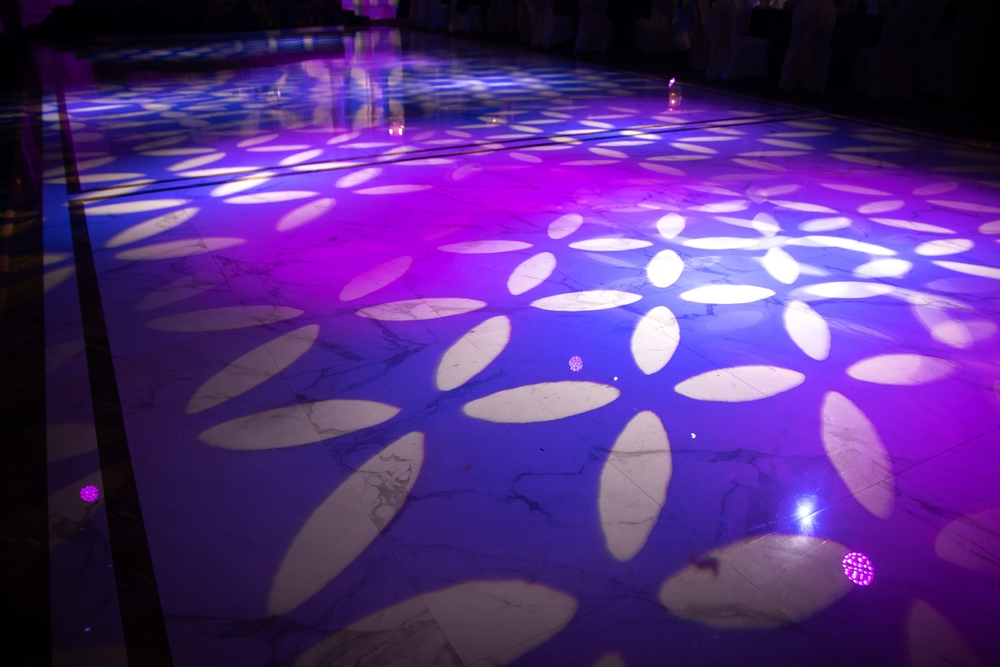
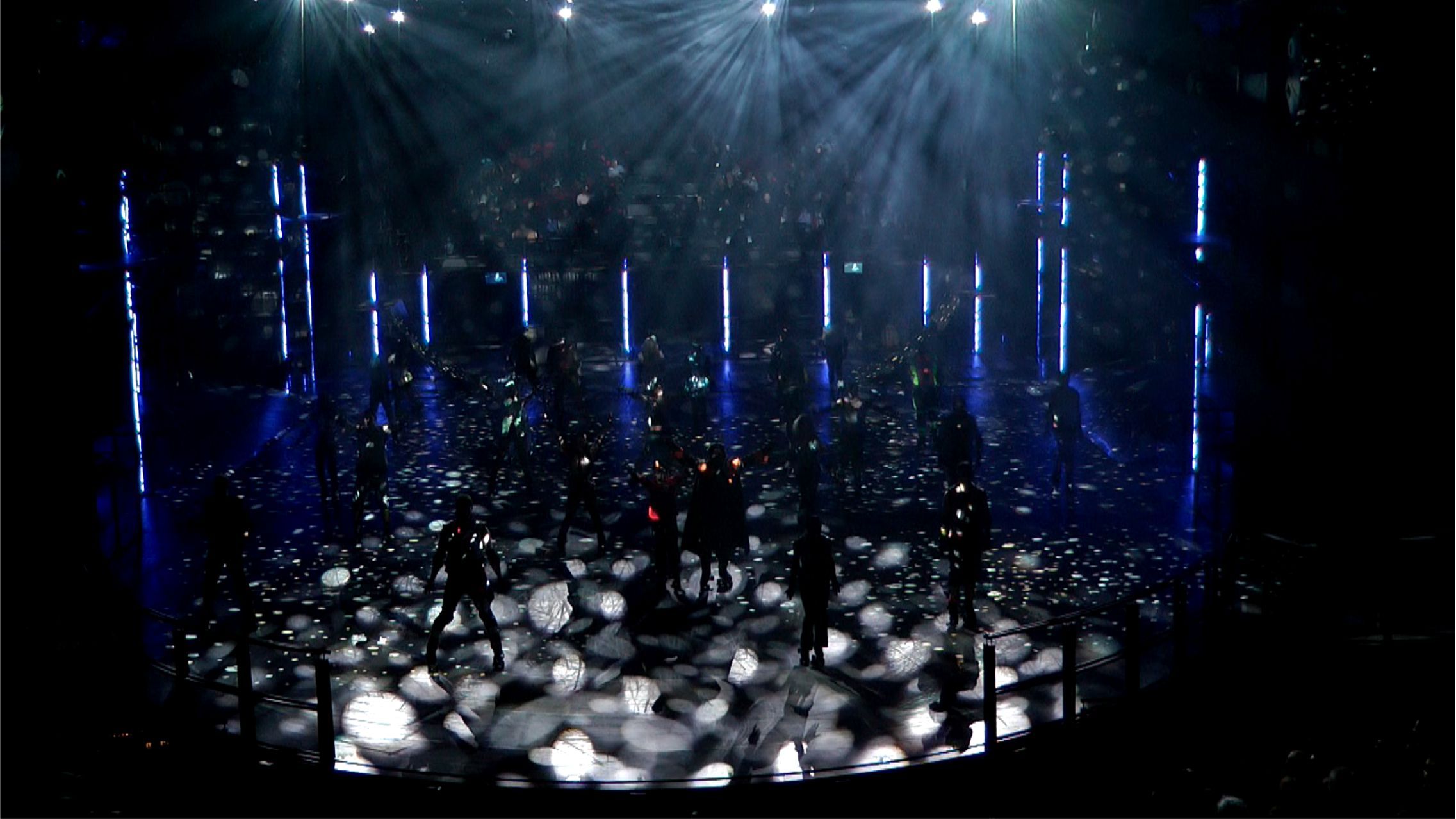
Professional lighting fixtures (moving heads, beam lights, pattern projectors) use longpass filters for one simple reason: **they produce rich colors without absorbing significant heat.
The problem with traditional color gels:
- Absorb unwanted wavelengths (convert light to heat)
- Fade, melt, or burn over time
- Require frequent replacement
The longpass filter advantage:
- Reflects short wavelengths instead of absorbing them
- Passes only the desired long wavelength color
- Minimal heat buildup → longer lifespan
Real-world example: Deep red stage effect
A 640nm longpass filter will:
- Allow 640nm – 700nm red light through
- Reflect blue/green wavelengths away
- Result: Highly saturated red light without excessive heat inside the fixture
Alternative approach: Dichroic color filters
Many stage lights use dichroic coated filters – a variation of longpass/shortpass technology. These are even more efficient because they reflect (rather than absorb) blocked wavelengths.
What to specify for stage lighting:
- High damage threshold: Continuous high-intensity discharge lamps generate significant heat
- Stable coating adhesion: Thermal cycling (on/off) can cause delamination if coatings are poor
- Accurate cut-on wavelength: A 10nm shift changes the perceived color noticeably
Application 3: Laser Systems & Beam Combining
Precise Wavelength Separation
In laser systems, longpass filters perform two critical functions: beam combining and noise rejection.
Scenario A: Beam combining (visible aiming + IR cutting laser)
Many industrial and medical lasers have:
- A visible aiming beam (e.g., 532nm green or 635nm red diode)
- An invisible cutting beam (e.g., 1064nm or 10.6µm CO₂ laser)
How a longpass filter solves the combining problem:
A 900nm longpass filter will:
- Reflect the 532nm aiming beam toward the target
- Transmit the 1064nm cutting beam along the same optical path
Result: The operator sees a green dot exactly where the invisible IR laser will fire.
Scenario B: Laser noise rejection
Sensitive detectors often pick up room light interference. A longpass filter placed before the detector:
- Blocks short-wavelength ambient light (room lights, sunlight)
- Passes only the longer wavelength laser signal of interest
Critical specs for laser applications:
- High damage threshold: >10 J/cm² for pulsed lasers
- Precise cut-on tolerance: ±3nm or better for narrowband lasers
- Substrate material: Fused silica or quartz for high-power lasers (K9 glass absorbs too much IR energy)
⚠️ Never use a standard glass-based longpass filter with high-power CO₂ lasers – the glass itself will absorb the 10.6µm wavelength and shatter. You must use zinc selenide (ZnSe) or similar IR-transmitting substrates.
Application 4: Machine Vision & Industrial Inspection
Enhancing Contrast for Accurate Detection
Automated inspection systems rely on consistent, repeatable lighting. Longpass filters eliminate environmental variables.
The problem:
- Factory lighting changes throughout the day (sunlight through windows, overhead fluorescent lights)
- Reflections from shiny parts vary
- Camera sensors see everything – including unwanted wavelengths
The longpass solution:
By placing a longpass filter on the camera lens or behind the illumination source, you:
- Allow only the target wavelength to reach the sensor
- Block all other ambient light
Real-world example: Detecting laser-etched codes on dark glass
- Illuminate with a specific wavelength (e.g., 850nm IR LED)
- Place an 850nm longpass filter on the camera
- Result: High-contrast image with no reflections or ambient interference
Key specification for machine vision:
- Sharp cut-off slope: Prevents "bleed-through" of shorter wavelengths that would wash out contrast
- Flat transmission band: Ensures consistent response across the entire active region
Application 5: Fluorescence Microscopy & Biomedical Instruments
Separating Excitation Light from Emission Signal
In fluorescence detection, the excitation light (short wavelength) must be **completely blocked** while allowing the emitted fluorescence (longer wavelength) to reach the detector.
How a longpass filter works in this application:
Example: A sample is illuminated with 488nm blue light (excitation). It emits 510nm green light (fluorescence).
A 500nm longpass filter placed before the detector will:
- Block the intense 488nm excitation light (prevents it from blinding the detector)
- Pass the weaker 510nm fluorescence signal
Without this filter: The excitation light would overwhelm the fluorescence signal → no usable data.
Special requirements for biomedical longpass filters:
- Extremely deep blocking: OD5 (0.001% transmission) or higher at excitation wavelengths
- High transmission at emission band: >90% to capture weak signals
- Autofluorescence-free substrate: Some glass materials emit their own fluorescence under UV excitation – unacceptable for sensitive measurements
✅ For fluorescence applications, always request a spectral transmission curve from your supplier. Verify the blocking depth at your specific excitation wavelength.
How to Choose the Right Longpass Filter for Your Application
Step 1: Define your operating wavelength
- What wavelength must pass through?
- What wavelength must be blocked?
- How close are these two bands?
Step 2: Calculate required steepness
- If pass and block bands are close → steep slope needed (costs more)
- If bands are far apart → gentler slope acceptable (costs less)
Step 3: Specify blocking depth**
- Consumer device (IPL): OD2 – OD3 is usually sufficient
- Laser safety: OD4+ required
- Fluorescence microscopy: OD5 – OD6
Step 4: Consider thermal and power requirements
- Low power / intermittent use: Standard coating OK
- High power / continuous use: Ion-assisted deposition (IAD) coating for durability
Step 5: Request a test sample
- Always test the actual filter in your device before bulk ordering
- Measure transmission with your own spectrometer if possible
Common Mistakes to Avoid
❌ Assuming all "640nm longpass filters" are identical
Different manufacturers use different coating designs. A 640nm filter from Supplier A may have 50% transmission at 635nm; from Supplier B only 5%. Always request the actual spectral curve.
❌ Ignoring angle of incidence
Longpass filters shift to shorter wavelengths when light strikes at an angle. If your device uses a 15° incident angle, specify the cut-on wavelength for that angle – not normal incidence.
❌ Using standard glass for high-power lasers
K9 glass absorbs UV and deep IR. For 1064nm or 10.6µm lasers, you need fused silica, ZnSe, or sapphire.
❌ Overlooking coating durability
For devices that experience thermal cycling (on/off repeatedly), standard coatings may fail. Specify IAD (ion-assisted deposition) coatings for maximum durability.
發表評論