Best Laser Lights for Events and Industry
Oct 30,2024 | JINGYU OPTOELEC
Looking to add a touch of Chinese flair to your next event? With so many different types of laser lights on the market, it can be tough to decide which one is right for you.
This guide will teach you everything you need to know about Chinese laser lights, including the types available and their average costs. We’ll discuss their common features and provide some buying tips to help you make an informed purchase.
Read on to learn all about Chinese laser lights.
What Are Laser Lights?
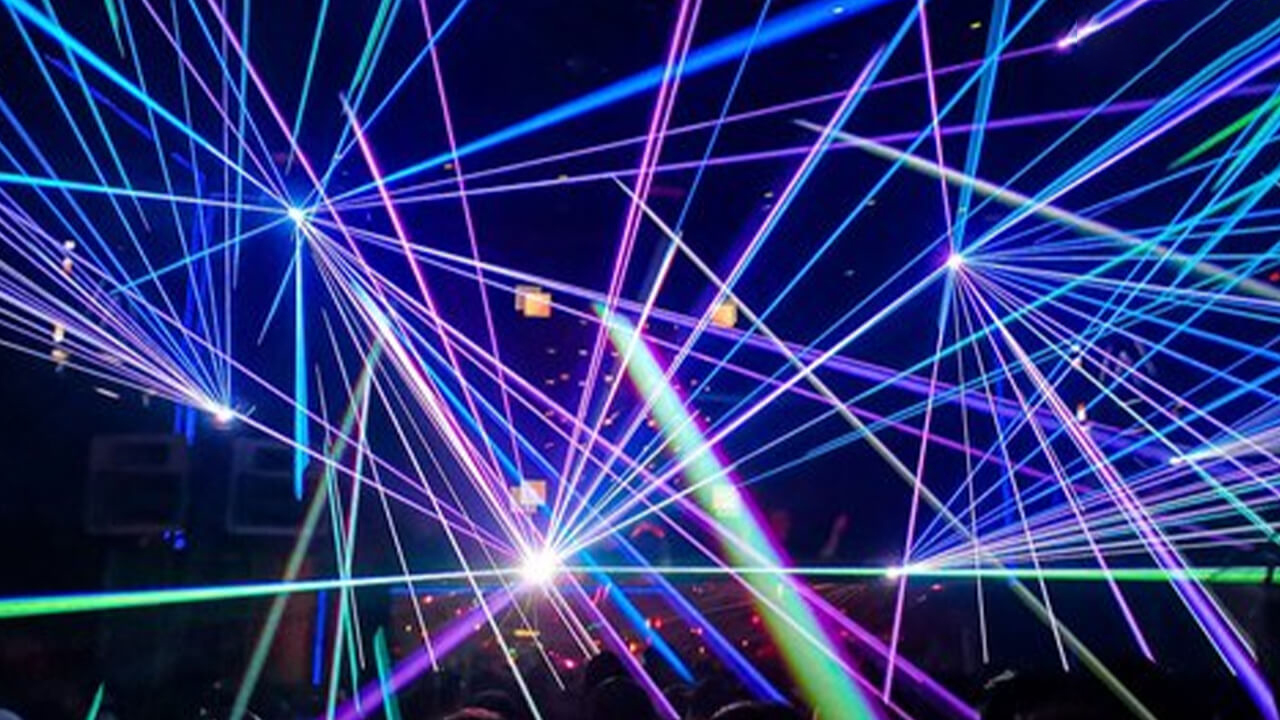
Laser lights are high-powered beams of light generated by lasers. They are used for a variety of applications, from light shows to industrial purposes.
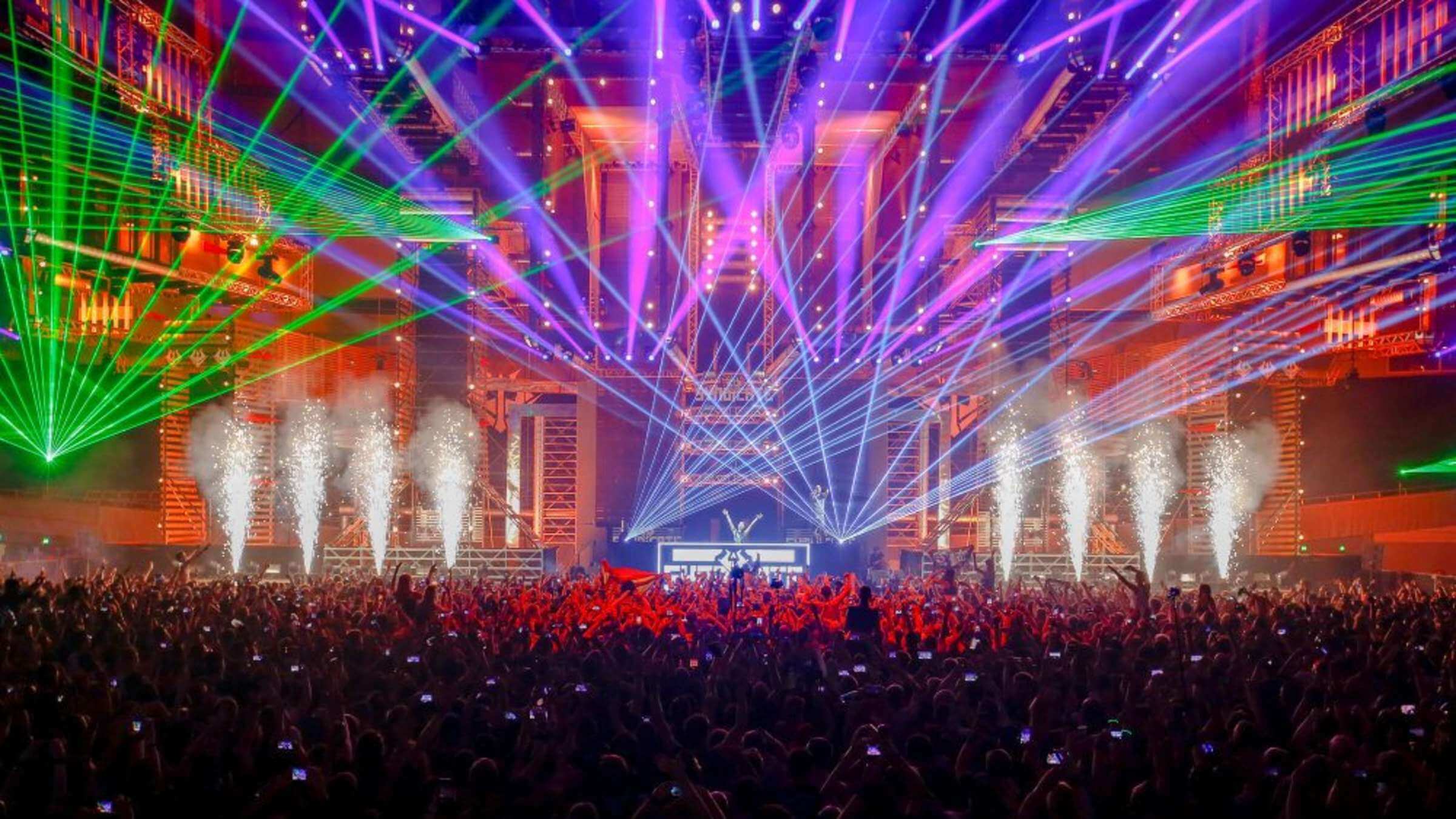
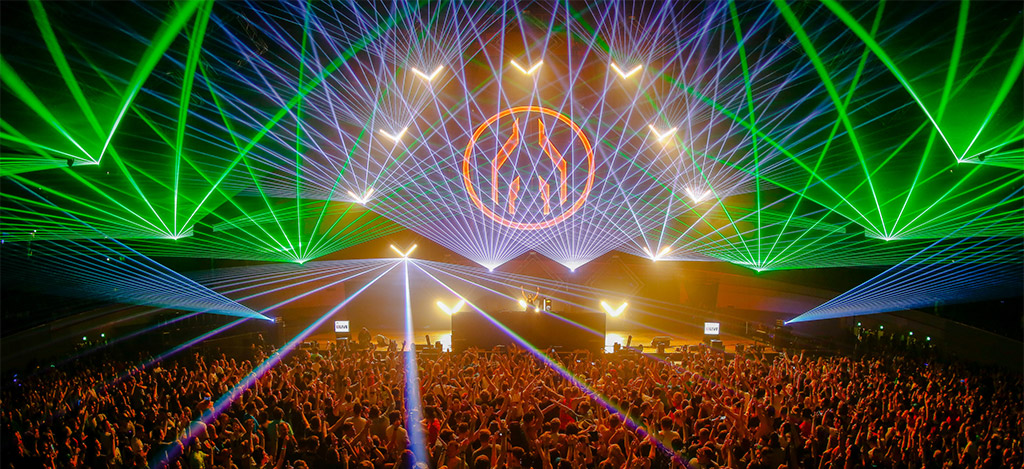
Laser lights typically come in different colors and designs depending on the manufacturer, making them highly customizable for any event or application. They can be extremely bright and are capable of creating images or patterns.
Additionally, laser lights can be used to create three-dimensional objects. Generally, lasers are produced by using a material that amplifies light (called an active medium) and then focusing the light with mirrors.
Some lasers, such as those used in a laser light projector, can travel long distances, while others cannot. Ultimately, the best type of laser for a specific use depends on the user's particular needs.
How Do Lasers Work?
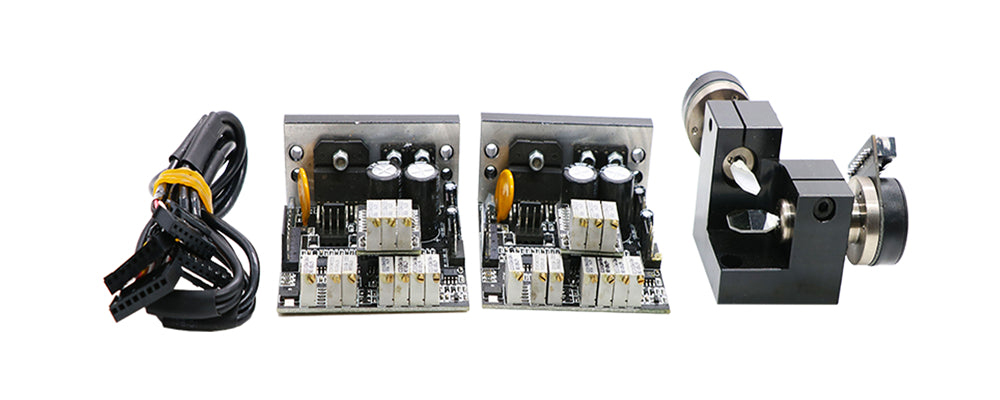
The light emitted by a laser is highly concentrated in one direction. This is achieved by using a material that amplifies light (called a gain medium) and two mirrors.
One of the mirrors, known as the output coupler, is partially transparent. The other mirror, called the total reflector, reflects all the light that hits it. The gain medium is placed between the two mirrors.
When the laser is turned on, electrons in the gain medium are excited and begin to emit photons. These photons bounce back and forth between the two mirrors. As they pass through the gain medium, more photons are emitted.
This amplifies the light signal until it becomes intense enough to escape through the output coupler. The result is a very powerful beam of light, all traveling in the same direction.
Three Main Types of Laser Lights
There are three main types of laser lights:
#1 RGB Laser Lights RGB laser lights are perfect for creating stunning displays. They produce three different beams that can be combined to create a variety of colors. RGB laser lights are commonly used in stage lighting shows and club lighting.
#2 DMX Laser Lights DMX laser lights are computer-controlled laser lights. They use a DMX controller to create various patterns and effects. DMX laser lights are often used in stage lighting and architectural lighting.
#3 ILDA Laser Lights ILDA laser lights are also computer-controlled. They use an ILDA interface to create various patterns and effects. ILDA laser lights are typically used for laser shows and nightclubs.
These are just a few of the most common types of laser lights. At Newfeel, we specialize in manufacturing various laser lights. Our ISO-certified factory ensures we provide the highest quality laser lights at the best prices.
Common Features of Laser Lights
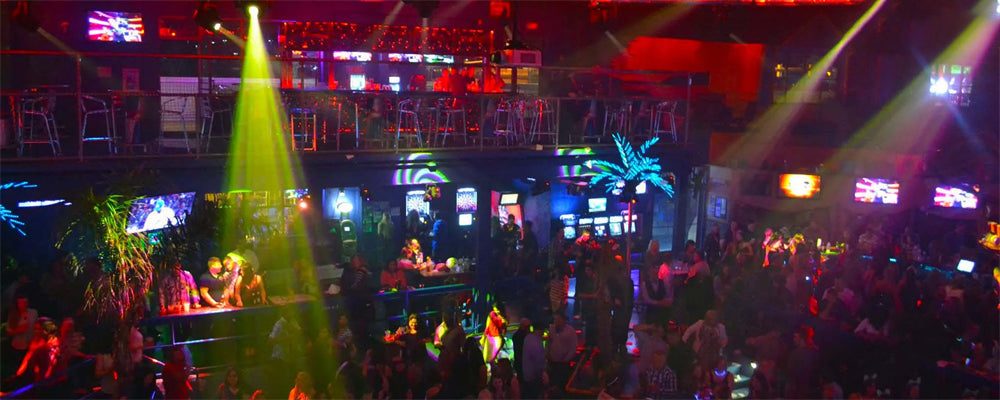
Laser lights consist of a coherent beam of light emitted from a laser source. This beam can be focused to a very small point, making it ideal for pointing and aiming. Laser lights are used in many applications, including presentations, stage performances, and even medical procedures. Common features of laser lights include:
High brightness
High brightness
Adjustable light beam size and shape
Multiple color options, including green laser and blue laser
Customizable patterns and laser designs
Different types of laser lights will have different features, and different applications will require various features. At Vorlane, we use the best materials and technologies to produce the highest quality laser lights.
Nine Industrial Applications of Laser Lights
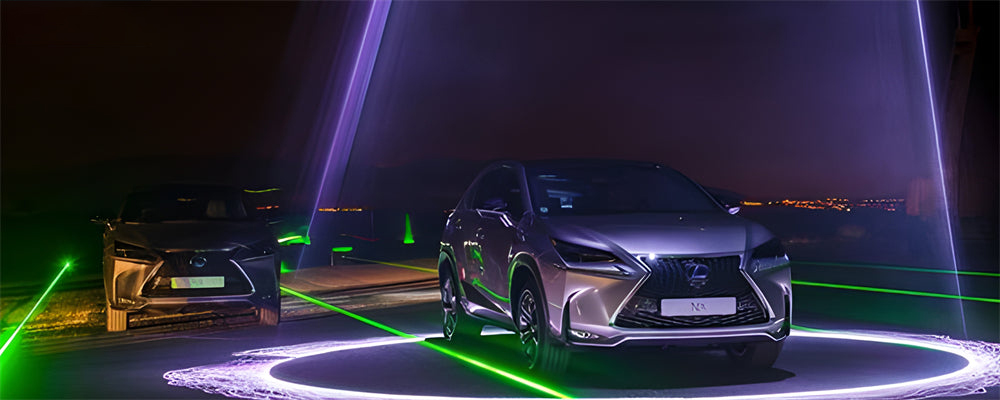
For many, laser lights are nothing more than festive decorations. However, their applications are vast and extend beyond simple decor. Here are some industrial uses of laser lights:
#1 Agriculture Laser lights are used in agricultural applications such as crop mapping, yield analysis, and precision farming. They are often combined with GPS systems to map fields and track crop growth.
#2 Automotive Laser lights are used in the automotive industry for body scanning, engine diagnostics, and headlight calibration. They are also used in the production of solar panels and wind turbines.
#3 Construction Laser lights are used in construction for leveling, slope checking, and surveying. They are also used for aligning pipes and foundations.
#4 Medical Laser lights have various uses in the medical field, including cancer treatment, eye surgery, and dental procedures. They are also used for diagnosing skin conditions and tattoo removal.
#5 Military Laser lights are used in the military for target indication, range finding, and night vision. They are also used to create decoys and to blind or dazzle enemy troops.
#6 Science Laser lights are used in a variety of scientific applications, including spectroscopy, microscopy, and interferometry. They are also used for measuring distance, speed, and height.
#7 Security Laser lights are used in security applications such as intrusion detection, perimeter protection, and surveillance. They are also used to create holographic images and to detect counterfeit documents.
#8 Entertainment Laser lights are used in various entertainment applications, including stage performances, nightclubs, and laser tag. They are also used for educational shows and planetariums. Moving head laser lights and animation laser lights are popular choices for creating dynamic effects.
#9 Manufacturing Laser lights are used in manufacturing for various applications, including cutting, welding, and marking. They are also used in the production of semiconductors and optical fibers.
Beyond simple decoration, laser lights have a wide range of industrial applications. At Newfeel, our team of experts can help you find the right laser light for your specific application.
Average Cost of Laser Lights
The average cost of a laser light is around $200. However, prices can vary depending on the type of laser light and the features it offers.
For example, laser lights designed for agricultural or automotive applications are generally more expensive than those designed for entertainment or security applications.
The cost of laser lights also varies based on the size and power of the laser. Smaller lasers are typically less expensive than larger ones.
The Manufacturing Process of Laser Lights

Lasers are produced when electrons in an atom are excited and release photons. The photons travel in a straight line and bounce off mirrors to create a beam. The light is then amplified through the laser medium. This step-by-step guide shows how lasers are made:
Step #1 Choose the Chemical Element The first step in the manufacturing process is selecting the chemical element used to make the laser. The most common elements are carbon dioxide, nitrogen, and argon.
Step #2 Create the Active Medium The next step is creating the active medium, the material that amplifies the light. The active medium is typically a gas, liquid, or crystal.
Step #3 Pump the Active Medium The active medium must be pumped with energy to produce a laser. This is usually done with an electric current or a flash of light.
Step #4 Create the Optical Cavity The optical cavity is created by placing two mirrors on opposite sides of the active medium. The mirrors reflect light back and forth through the medium, amplifying it.
Step #5 Add the Gain Medium The gain medium is added to the optical cavity to further amplify the light. The gain medium is typically a crystal or glass rod placed in the cavity.
Step #6 Add the Pump Source The pump source is added to the gain medium. The pump source provides the energy needed to amplify the light.
Step #7 Generate the Laser Beam The final step in the manufacturing process is generating the laser beam. This is done by passing the amplified light through one of the mirrors in the optical cavity. The laser beam is then directed to the desired location.
Six Laser Light Buying Tips
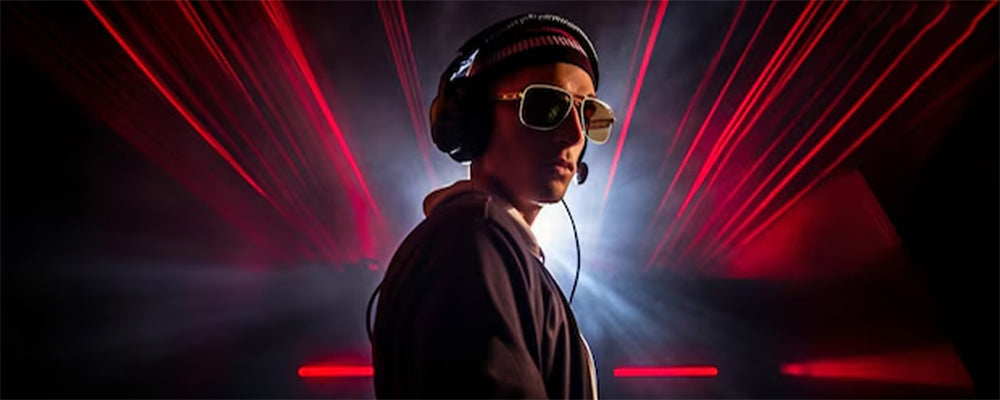
With so many different types of laser lights on the market, keep these tips in mind if you're looking for laser lights to highlight a landscape or decorate for the holidays:
#1 Power Consider the power of the laser light. Higher-powered laser lights are visible over greater distances but may also produce more glare.
#2 Beam Pattern Consider the beam pattern. Some laser lights produce a single focused beam, while others produce a wider, more scattered beam. If unsure what you need, it’s best to seek guidance from a professional.
#3 Color Laser lights come in a variety of colors. While most people opt for green laser or red laser lights, blue laser and white laser options are also available. Think about the look you want before making a final decision.
#4 Location Consider the location where the laser light will be used. If you plan to use it indoors, you will need a laser light approved for indoor use. If you plan to use it outdoors, ensure it is weather-resistant and designed for outdoor use.
#5 Size and Weight Laser lights come in various sizes and weights. If you plan to use the laser light outdoors, choose a model that can withstand harsh weather conditions.
#6 Power Output Always check the power output of the laser light. Some models are only for indoor use, while others can be used both indoors and outdoors.
Maintenance and Troubleshooting
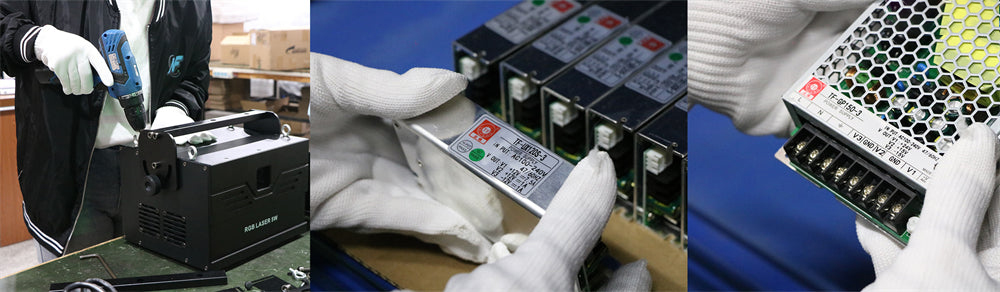
Keeping Lights Bright Regular cleaning is key. Use a soft cloth to gently wipe the lens and body, keeping the beam clear and sharp. Don't forget to check cables and connectors for wear and tear.
When Lights Flicker If your laser starts flickering like a laser disco ball, first check the power connections. Loose wires can spoil the fun. Still flickering? You might need to replace a part or two.
Colors Going Weird If red turns to pink, recalibration is needed. Dive into the control software and make adjustments. If that doesn't fix it, a professional may need to handle the color filters or LEDs.
Unresponsive Lights Unresponsive lights may need a reset. If they still ignore you, check for software updates. Sometimes, a little digital nudge is all they need to get back on track.
Laser Longevity Store your lights in a cool, dry place to avoid damage from heat and moisture. Remember, even lasers need a break. Let them rest between shows to keep them going strong for years.
Expert SOS Some problems are bigger than DIY fixes. If you're stuck, don't hesitate to seek help. Professionals can solve those tricky internal issues safely and efficiently.
If you're looking for an out-of-this-world light show, Newfeel laser lights are your best bet. These versatile and powerful lights create stunning displays that leave guests speechless.
We have the experience and expertise to help you create the perfect light show for your event. Contact us today to get started.
發表評論