How Gobo Lights Work: Unveiling the Science Behind Projected Patterns
Aug 23,2025 | JINGYU OPTOELEC
Gobo lights have become indispensable in lighting design, from theater stages to corporate events, but few understand the clever science that makes their magic possible. At their core, these devices blend optics, material science, and precision engineering to transform ordinary light into dynamic, customizable projections. Let’s break down the principles that power gobo lights.
The Core Components: Light Source, Gobo, and Optics
A gobo light’s functionality relies on three key elements working in harmony. First is the light source—typically a high-intensity LED, halogen, or discharge bulb. This source emits a concentrated beam that serves as the "canvas" for the projection. Next is the gobo itself—a thin, stencil-like disc made from materials like metal, glass, or plastic. Metal gobos are laser-cut for durability, while glass gobos use etched coatings to create intricate designs, and plastic gobos offer cost-effective flexibility for short-term use. Finally, optics (lenses and reflectors) focus and shape the light, ensuring the gobo’s pattern projects sharply onto surfaces.
The Projection Principle: Blocking and Transmitting Light
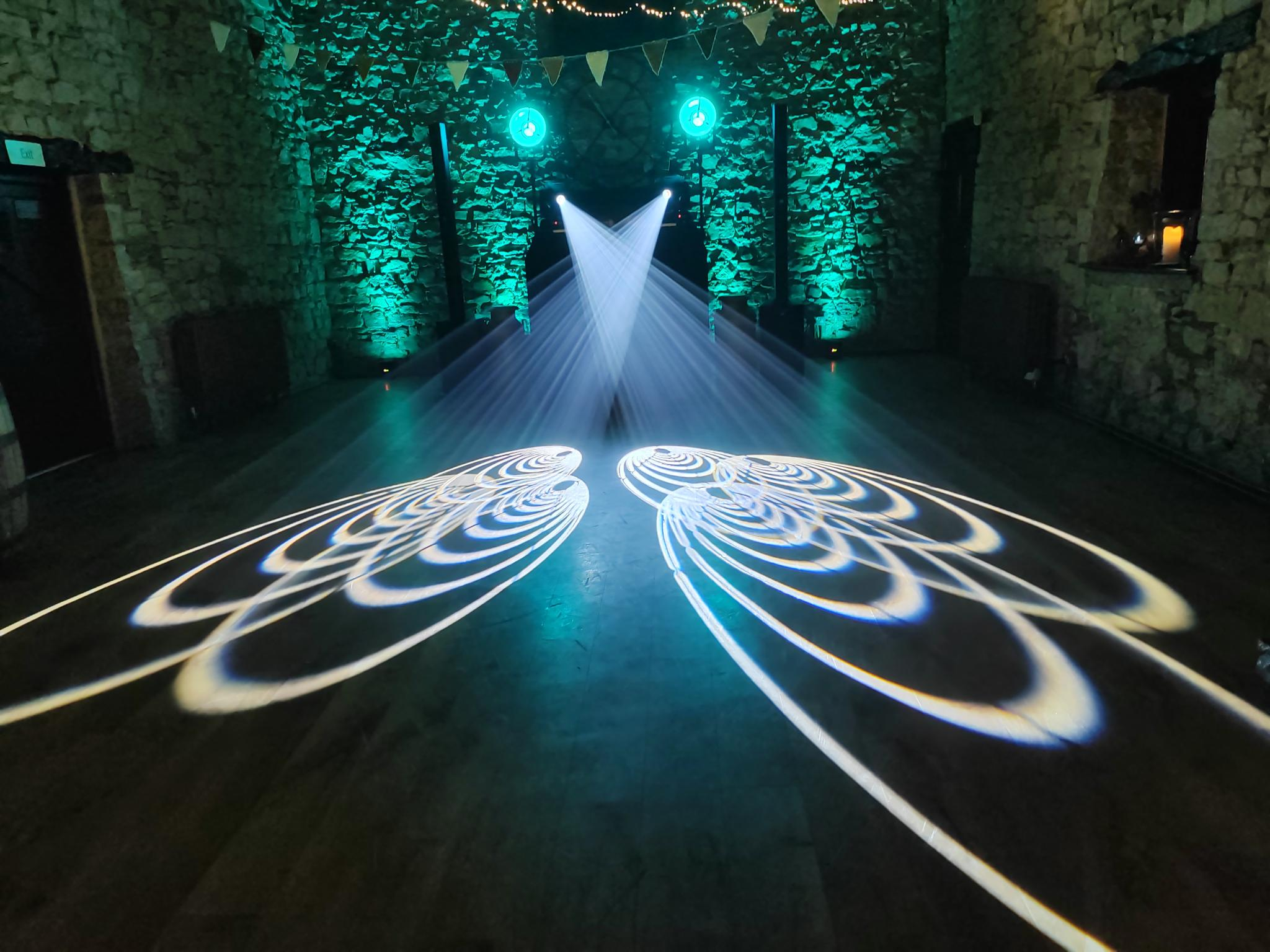
The magic of gobo lights lies in selective light control. When the light beam hits the gobo, areas of the disc that are solid (unaltered material) block the light, creating "negative" space in the projection. Conversely, cut-outs or etched sections allow light to pass through, forming the desired shapes, text, or patterns. This is similar to how a shadow puppet works, but with far greater precision. For example, a custom gobo with a company logo will block light everywhere except the logo’s outline, projecting that exact image onto a wall or floor.
How Optics Enhance Clarity and Scale
Optical systems in gobo lights play a critical role in refining the projection. Lenses adjust the beam’s focus, ensuring sharpness whether the projection is 2 feet or 20 feet away. Some advanced gobo lights also include zoom features, letting users scale the projected image up or down without distorting the design. This versatility is why glass gobos—with their ability to hold fine details—are preferred for high-resolution projections, such as scenic backdrops in theaters. The optics also account for light dispersion, preventing blurriness even when projecting large patterns.
Material Science: Why Gobo Material Matters
The choice of gobo material directly impacts performance, tied to the light source’s intensity. Metal gobos, made from heat-resistant stainless steel, thrive with powerful halogen bulbs, as they won’t warp under high temperatures. Glass gobos, coated with heat-resistant materials, handle intense LED or discharge lights while maintaining intricate details. Plastic gobos, though affordable, work best with lower-heat LEDs for short events, as excessive heat can melt their designs. Understanding this material-light relationship ensures the gobo lasts and projects clearly.
Applications: From Simple Logos to Dynamic Scenes
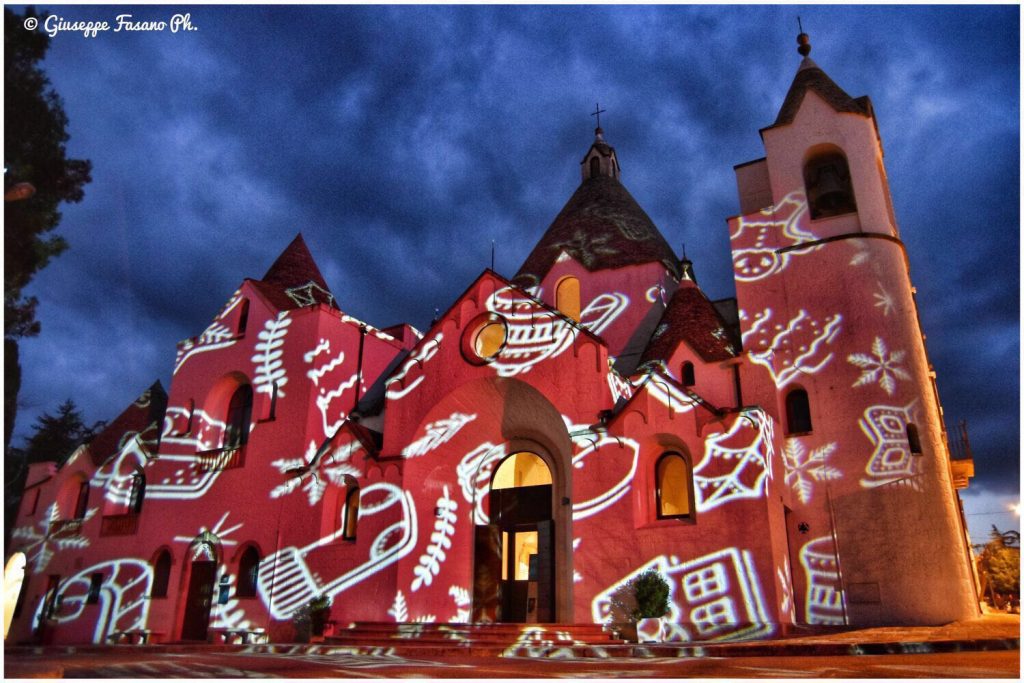
Gobo lights principle makes them adaptable to endless scenarios. In events, a custom gobo might project a couple’s names at a wedding, using precise light blocking to highlight the text. In retail, metal gobos with brand logos can be projected onto storefronts, leveraging durable materials for daily use. Theaters rely on glass gobos to project moving clouds or forest scenes, where the optics’ ability to scale and focus turns static discs into dynamic backdrops. Even in architecture, gobo lights use their projection principle to transform building facades with seasonal patterns.
In summary, gobo lights are a masterclass in combining light control, material science, and optics. By blocking and transmitting light through precision-engineered gobos, they turn ordinary beams into storytelling tools. Whether you’re using a metal gobo for durability, a glass gobo for detail, or a custom gobo for personalization, understanding their principle helps unlock their full potential in any lighting design.
發表評論